
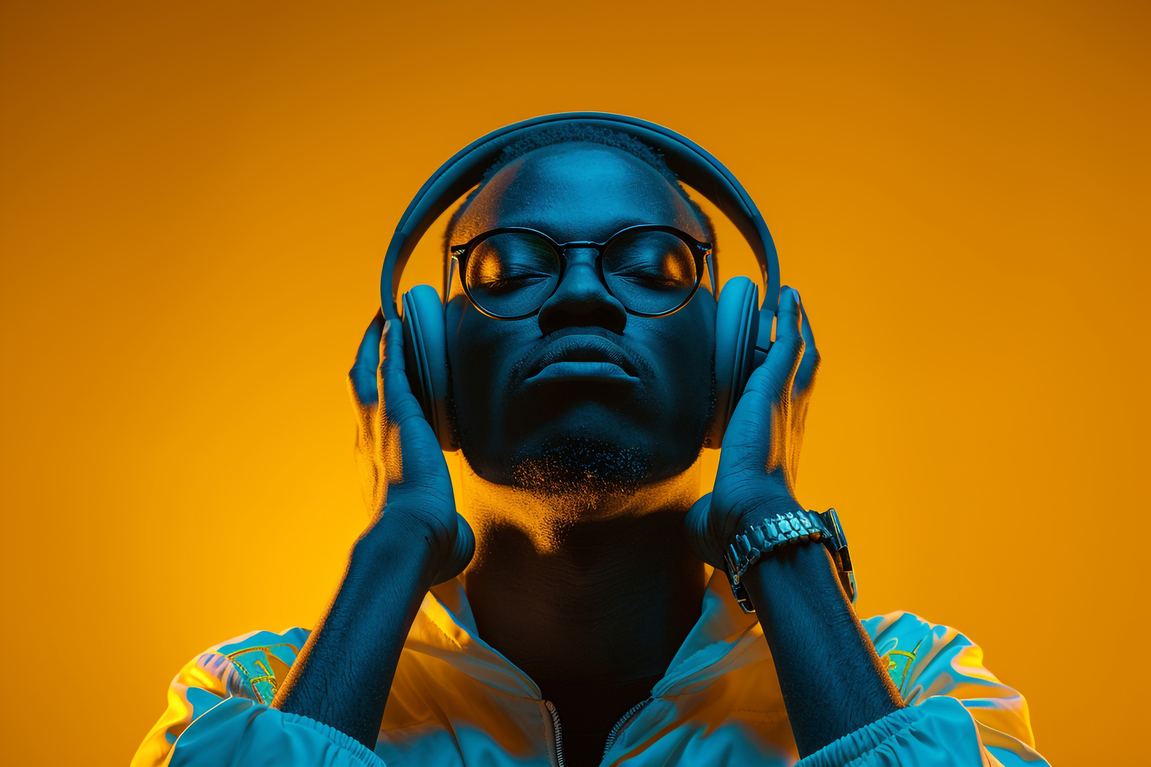
One important sector of Nigeria’s creative economy is the entertainment industry. Many people believe that only the movie industry reflects real life experiences. In contrast, music often goes beyond the present realities to explore fururistic and untold experiences. The music industry is one of the most entertaining and realistic sectors that shapes culture and connect people across the world.
A popular debate on social media asks: “which African country produces the best music?” Many African countries have talented and popular music artists known for their peculiar styles of rhythm. African music often reflects history, identity, culture, personality and everyday experiences which are stylishly embroidered into their art of music. This uniqueness in music is highly attributed to the Nigerian artists, particularly nicknamed “Naija Artists”. They style their thoughts and aesthetic visions with techniques, rhythms, and patterns that distinguish them from many other African artists. Nigerian artists have become leading figures in African music and challenging the global scale.
HISTORY OF AFROBEAT IN NIGERIA
The popular “Afrobeat” emerged in the 1960s following a transcending shift from the African traditional convention of music to a blend of African and Western rhythmic patterns.
Afrobeat combines West African highlife, American jazz, funk, and soul music. It dates back to the early twentieth century around 1960s, when the pioneer, Fela Kuti, drummer Tony Allen, and his band African ‘70 fused Africa highlife and Fuji with American jazz. This blend inspired many artists due to its distinctive rhythms and melodies which brought about a shift in African music.
THE EVOLUTION OF MODERN AFROBEATS
The infusion of the traditional African highlife and American Jazz gave rise to the commonly referred to as “AFRO-POP” in the early 2000s with Innocent Idibia popularly known as “2Baba” championing this musical shift. His famous hit track “African Queen” in 2004 paved the way for the popularity of this Afro-pop style. He shifted the musical style from Kuti’s long instrumental solos to a shorter, catchy trend; restructuring the live, large Afrobeat bands to a studio-produced format, hence working with persons like OJB Jezreel.
MODERN SHIFT TO CONTEMPORARY AFROBEATS
Although the shift from modern Afrobeats artists reigned over time, rising artists expanded Afrobeats towards being globally recognized. This remarkable turn arose due to innovation and global digitalization, leading to the use of digital gadgets to increase audience reach.. The 2020s transition further brought to limelight a slower atmospheric soundscape which further popularized the market mechanics of the two-minute song optimized for streaming platforms like Spotify.
NIGERIAN CONTEMPORARY AFROBEATS ARTISTS
Notable artists of the contemporary Afrobeats genre: Wizkid, Davido, Burna Boy, Omah Lay, Kizz Daniel, Ayra Star, Chike, and many others helped shift attention towards songs about love, anxiety, heartbreak, personal experiences while still exploring West African syncopation, South African club structures, and local cadences. In addition, this musical shift brought global streaming, algorithm, TikTok challenges, and international festivals.
As this trend championed the digital era, throngs of artists carved unique vocal styles and techniques. Vocal peculiarity became the distinct attribute of the artists, and turned the global wave into a driving force to dominate global recognition. Artists like Wizkid, Davido, and Burna Boy lead the global wave of this era.
THREE MAJOR ARTISTS OF NIGERIAN AFROBEATS
Rooted in the West African heritage with a blend of American jazz, Afrobeats is in a new era of success with three artists anchoring the global musical scene: Wizkid, Davido, and Burna Boy.
The global crossover wave of Afrobeats was championed by Wizkid whose vocal style shifted Afro beats into global mainstream by bridging the gap between Nigeria and Western pop. His collaboration with the Canadian rapper and singer , Drake, in 2016 on the music “One Dance” hit #1 on the Billboard Hot 100 introducing Afrobeats to a wider global audience. In 2020, his lyrics feature on “Essence” with Tems became the first Nigerian song to chart highly on the Billboard Hot 100 without a lead foreign artist. This hit song earned a Grammy award nomination.
Davido’s single hit track “Fall” in 2017 anchored his global breakthrough which gained recognition as the longest-charting Nigerian pop song in Billboard history. His collaboration with Chris Brown in 2019 on the song titled “Blow My Mind” entered international mainstream chart and expanded his North American listener base. The release of his album “Timeless” in 2023 earned a Grammy nomination for “Best Global Music Album”, and earned a Silver Certification in the United Kingdom.
The Grammy-winning artist, Burna Boy, popularly known as “The African Giant”, is recognized for his global stadium tours, and his collaborations with many international music artists. His romantic Afro infusion hit “On the Low” (2018) became one of his biggest international records which gave him audiences outside Africa. Burna Boy blends his Afro-infusion style with Western artists across Pop, Hip-Pop, R&B, and Rock. His collaboration with the Colombian singer, Shakira, titled “Dia Dia” (2026) was performed during the World Cup festivities, and has reached #1 on the Billboard Global 200.
GLOBAL WAVE OF AFROBEATS
Afrobeats has made a drastic change over the years challenging longstanding stereotypes about African music, and positioning Afro beats as the leading music genre over Africa and internationally. Afrobeats artists have infused African style deeply with American jazz and blues to create a dynamic rhythm, and collaborate with international artists to gain larger audiences outside Africa.


DISCUSSION